Pendleton vs Purple Nest: choosing the right heirloom throw
If you're shopping for a throw blanket that lasts longer than the couch you put it on, two names will keep coming up. Pendleton, the American wool legend that's been weaving since 1863. And Purple Nest Design, our small studio bringing handloomed alpaca throws from Peru and Ecuador.
We get asked all the time how we compare to Pendleton. So here's the honest answer.
The short version
Pendleton makes beautiful, hard-wearing wool blankets with deep American heritage. If you want a classic wool throw with iconic patterns and a brand you've grown up seeing, they're a great choice.
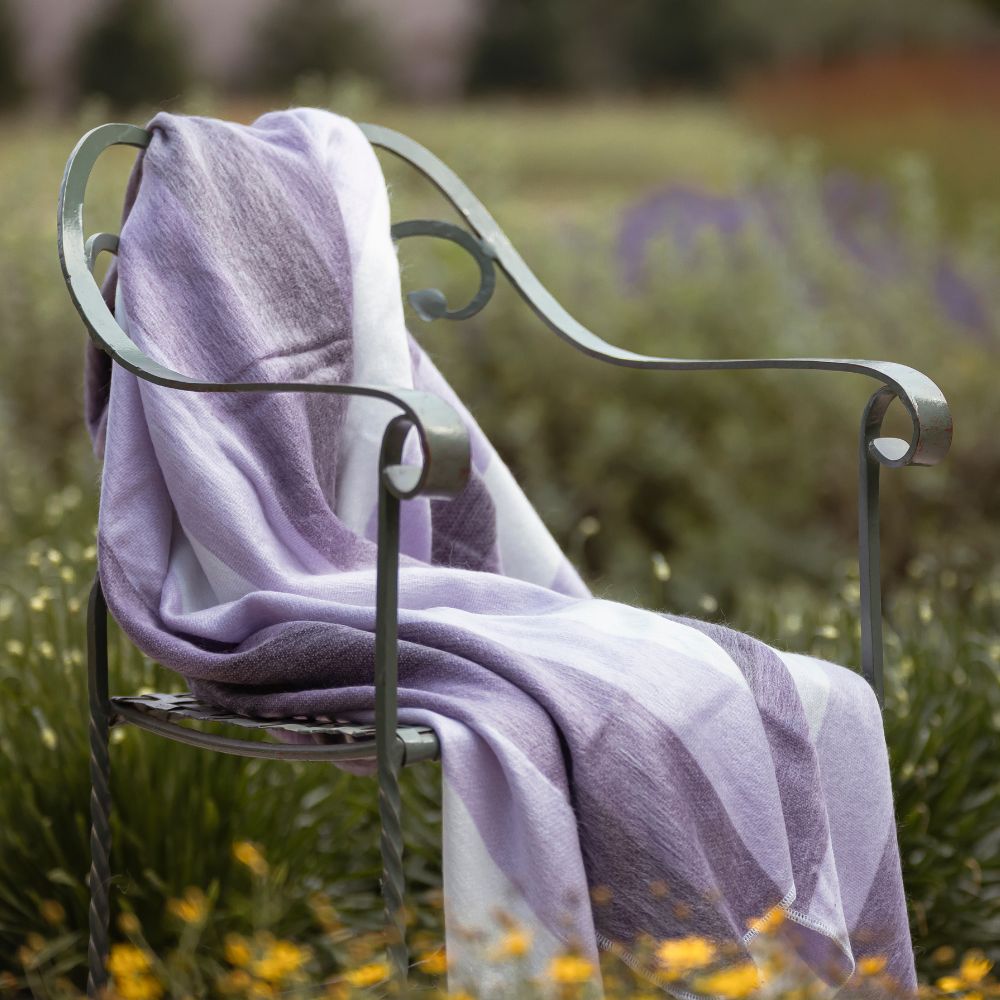
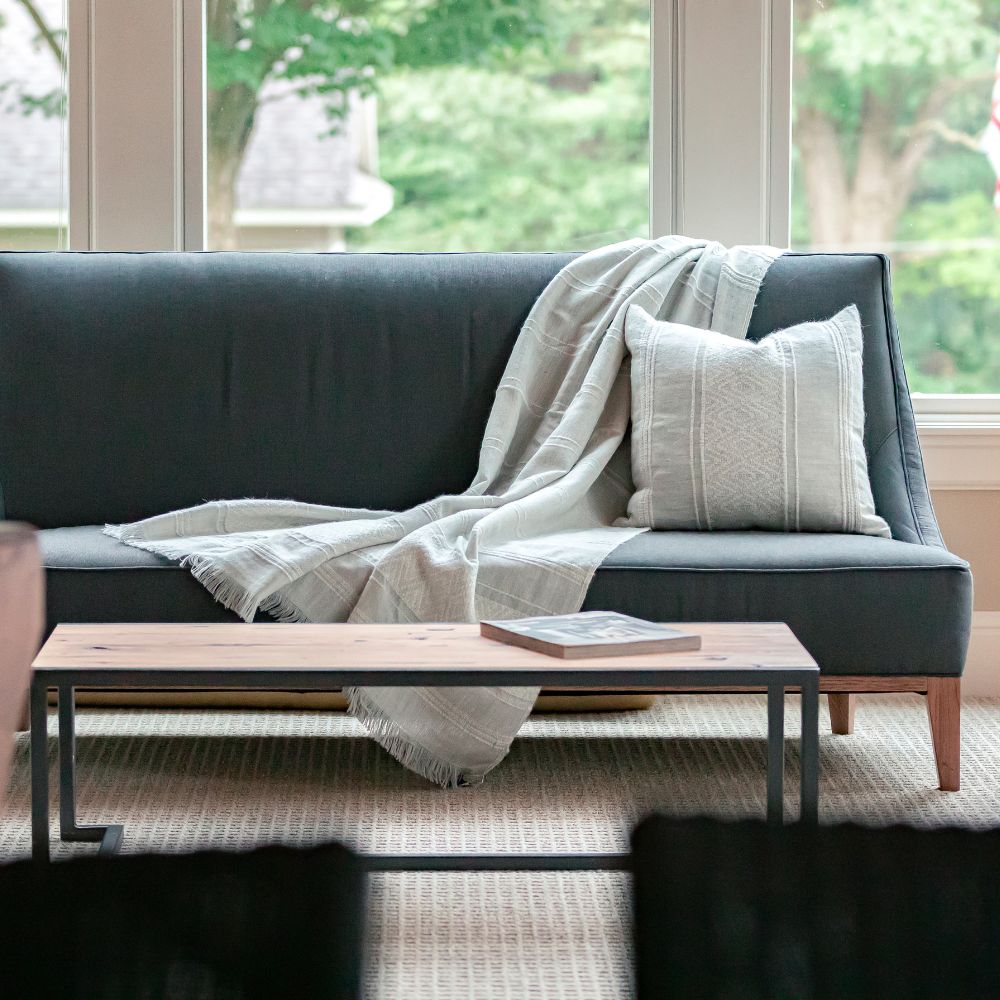
Purple Nest makes handloomed alpaca throws that feel softer than cashmere and last for generations. If you want a quieter luxury, a kinder fiber on your skin, and the story of an Andean weaver behind every piece, that's us.
Both companies make throws you'll still be using in twenty years. The right one depends on what you actually want to wrap up in.
Pendleton vs Purple Nest at a glance
| Pendleton | Purple Nest Design | |
|---|---|---|
| Fiber | Wool (mostly merino and virgin wool) | 100% baby alpaca and royal alpaca |
| Weave method | Machine-loomed at scale | Handloomed by Andean artisans |
| Feel | Warm, structured, classic wool texture | Cloud-soft, drapey, no scratch |
| Hypoallergenic | No, contains lanolin | Yes, lanolin-free |
| Origin | Made in USA (Pendleton, Oregon) | Hand-woven in Peru and Ecuador |
| Price range | $129 to $400+ | $250 to $500 |
| Production | Mass production | Small batch, limited runs |
| Founded | 1863 | Female-founded, independent |
| Gives back | Some collection partnerships | 3% of revenue to artisan communities |
Why some people choose Pendleton
Let's give credit where it's due. Pendleton has earned its place. Their wool blankets are tough, warm, and patterned in ways that have become genuinely iconic. The trade blanket designs are pieces of American history. If you're heading into a cold winter, building a cabin aesthetic, or want a throw that can survive being dragged onto a porch, around a campfire, and back inside, Pendleton holds up.
You're picking Pendleton for:
- Bold, recognizable patterns with story
- Heavy, structured wool warmth
- A blanket you don't worry about
- A widely available, trusted brand
- A specific Pacific Northwest or Western design language
That's a real list. We aren't here to talk you out of it.
Why people choose alpaca instead
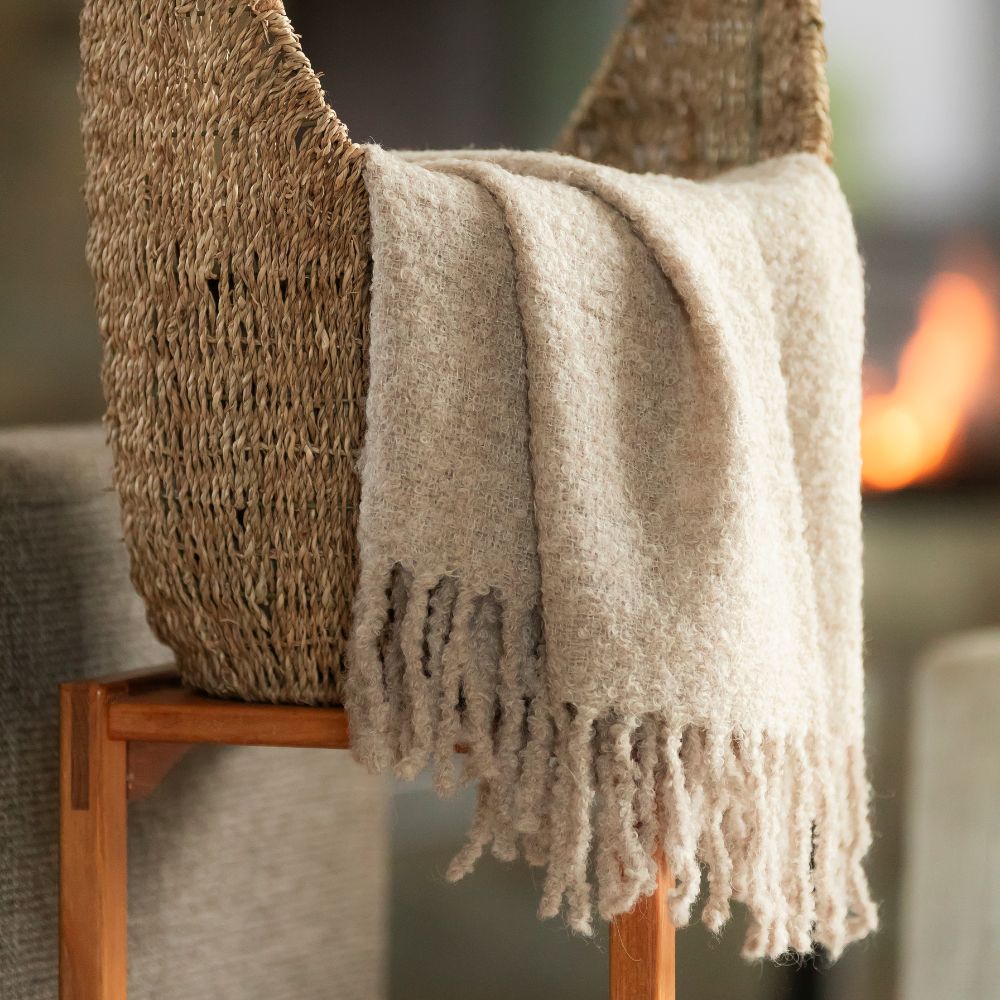
Alpaca is what wool wishes it was. The fiber is hollow, which means it holds heat better than sheep's wool while weighing less. It has no lanolin, so people who get itchy or break out from wool can wrap up in it without a second thought. And unlike most wool, it gets softer the more you use it. It doesn't pill the way merino does. It doesn't smell wet when it's wet.
Add handlooming to that, and you're holding something that machines genuinely can't reproduce. Each Purple Nest throw is woven by a person whose family has been doing this for generations. That's not a marketing line. That's just what handlooming is.
You're picking Purple Nest for:
- A blanket that feels like cashmere but lasts longer
- Skin that reacts to wool
- A piece you want to pass down, not replace
- Supporting fair-trade artisan communities directly
- Heirloom craftsmanship over mass production
- A quieter, softer luxury that doesn't shout
The fiber question, settled
This is where most comparisons get vague, so we'll be specific.
Wool (Pendleton's fiber) is dense, durable, and warm. It also contains lanolin, which is the natural oil sheep produce. Lanolin is what makes some people itch and what gives wool its distinct smell. Wool wears in by becoming softer over years, but it can pill and felt if washed wrong.
Alpaca (our fiber) has no lanolin. Baby alpaca is the softest grade, taken from the first shearing of a young alpaca. Royal alpaca is the rarest and finest. Both feel closer to cashmere than wool. Alpaca is also stronger than wool by fiber, which is part of why a properly cared-for alpaca throw can outlast its owner.
If you've ever loved a wool blanket but quietly wished it didn't make your neck itch, that's the alpaca pitch in one sentence.
Care and longevity
A good Pendleton wool blanket, treated well, lasts 20 to 30 years easily.
A good alpaca throw, treated well, can be passed down. We have customers who inherited alpaca textiles from their grandmothers that still look almost new. The fiber is that resilient.
Care is similar for both. Cool wash, lay flat to dry, store with cedar to keep moths off. Don't put either in a dryer.
When you should probably get both
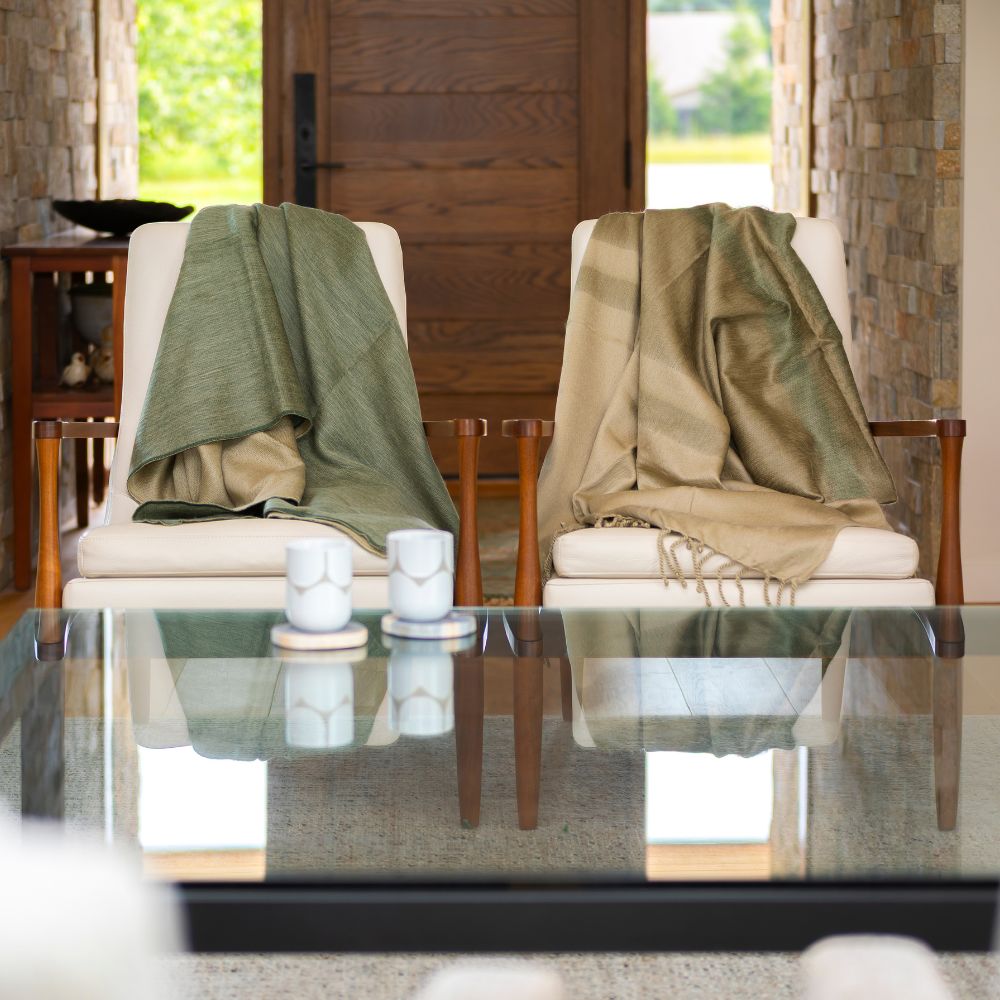
This isn't a competition where one brand has to win. A lot of our customers have a Pendleton folded over a chair for the cabin, the cold porch, the rugged moments, and a Purple Nest throw on the bed or sofa for everyday softness. Different fibers, different jobs.
If you have to pick one and you're unsure, here's the test we use:
Will this blanket touch your skin a lot? Get alpaca.
Will this blanket get dragged outside, stuffed in a car, slept under in a tent? Get wool.
Are you buying it as a gift you want them to remember forever? Get alpaca.
Are you decorating a space that calls for an iconic American wool pattern? Get Pendleton.
A note on what your money does
When you buy from Pendleton, you're supporting an American manufacturer that's been around for over 160 years. That's worth something.
When you buy from Purple Nest, 3% of every order goes back to the artisan communities in Peru and Ecuador where our throws are made. The other 97% is paying weavers fair wages for handlooming a textile that takes days, not minutes. We work directly with the artisans. There's no middleman.
We're not better than Pendleton because of this. We're just doing something different with the model.
FAQ
Is alpaca warmer than wool? Alpaca is warmer per gram than wool. The fiber is hollow, which traps heat more efficiently. A lighter alpaca throw will keep you warmer than a heavier wool one.
Is alpaca more expensive than wool? Yes, generally. Alpaca fiber takes longer to harvest and process, and Purple Nest throws are handloomed rather than machine-made, which adds time. You're paying for the fiber and the craft.
Can I wash an alpaca throw? Yes. Cool water, gentle detergent, lay flat to dry. Do not tumble dry. Treated this way, your alpaca throw will outlast you.
Are Purple Nest throws hypoallergenic? Yes. Alpaca contains no lanolin, which is the protein in wool that triggers most wool allergies. People who can't wear wool can usually wear alpaca with no issue.
What's the difference between baby alpaca and royal alpaca? Baby alpaca is the softest grade most people will encounter. Royal alpaca is the rarest, taken from the finest fibers of a single alpaca. Both feel closer to cashmere than wool.
Where are Purple Nest throws made? In Peru and Ecuador, by artisans we work with directly. Each throw is handloomed, not machine-made. Our weavers are paid fair wages, and 3% of our revenue goes back to their communities.
How long does a Purple Nest throw last? Decades, with proper care. Alpaca fiber is more resilient than wool by strength. We have customers using throws their grandmothers bought.
Ready to see what handloomed alpaca actually feels like? Shop our throws or read the story of our weavers.